Contact Us
- KSB Project Management Services
Emaar Business Park Block 3, office 201,
Dubai, United Arab Emirates - +info@ksbprojects.ae
- info@ksbprojects.ae


Outsourcing Project Management offers a cost-effective solution for organizations lacking the necessary project management expertise to handle complex projects. KSB Project Management Services collaborates closely with the customer throughout the project’s lifecycle, within the following scope:
Project Performance Management is typically one of the services offered by the Project Manager’s office. However, KSB Project Management Services is fully prepared to deliver this service on behalf of the customer.
Once the organization has established the right Project Management methodology and has structured the appropriate project team, the need for a Project Management Office (PMO) arises.
KSB Project Management Services will collaborate closely with the customer to develop the PMO, which will be capable of achieving the following:
While delivering Project Management services to our customers, KSB Project Management Services identifies the necessary reports required to effectively manage the project and keep stakeholders informed about the progress.
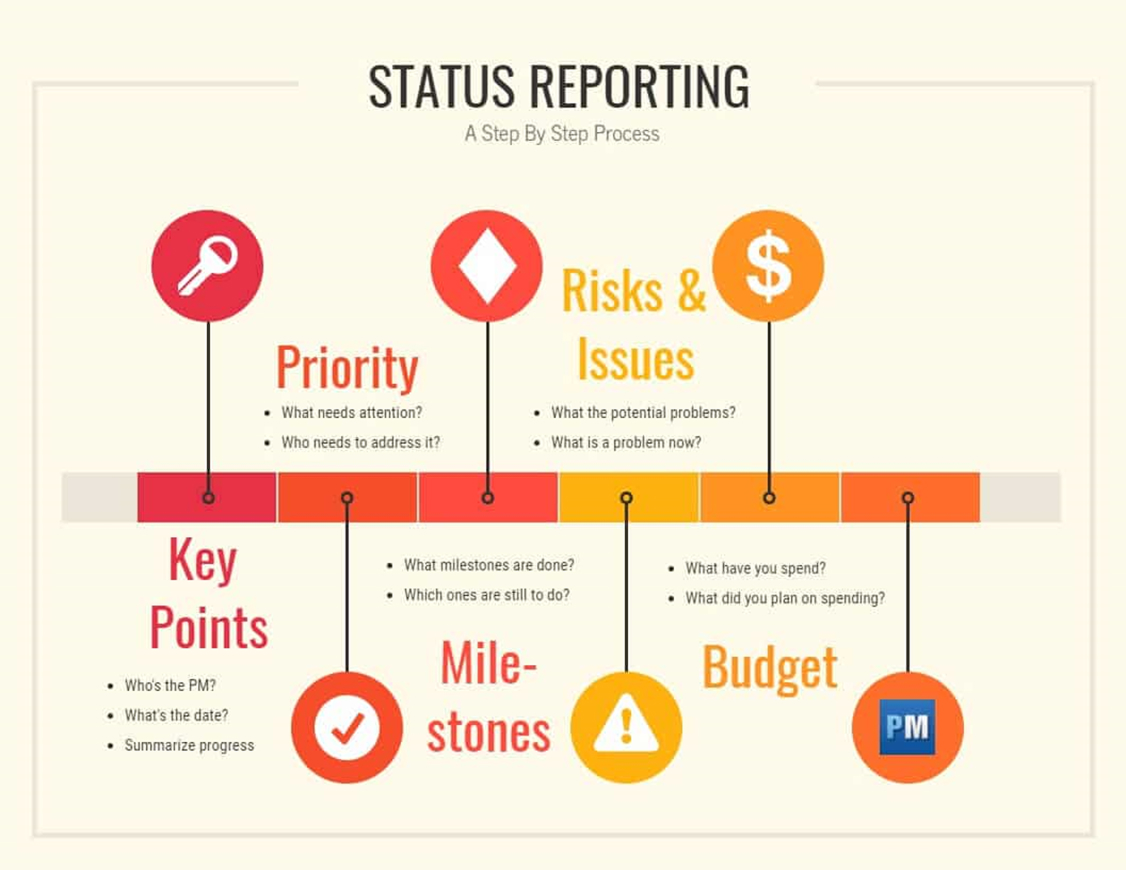
The reporting modules are categorized as follows:
Periodical project status report: concise one-page document summarizing the project’s accomplishments, work in progress, and any issues or risks identified during the reporting period. Clients can drill down into this report for more detailed information about the specific period.
Projects Health Report: this report provides a single-line overview of each project, including a visual color-coded indicator that reflects the project’s health, specifically showing schedule variance.
Overdue tasks: A report listing tasks that are past their due date, including details like percentage completed, duration, duration variance, start date, baseline start date, start variance, finish date, baseline finish date, finish variance, and assigned resources.
Upcoming tasks: This report highlights tasks that are not yet complete but are scheduled to start within the upcoming period.
Achieved tasks: A report showing the tasks that have been completed within a selected time period.
In progress tasks: This report focuses on tasks that are currently being worked on at the time the report is generated.
Critical Dependency tasks: report highlighting tasks that are flagged as dependencies in the project schedule.
Performance Point tasks: This report emphasizes tasks that are designated as key performance points in the schedule.
Earned Value: Displays the earned value of tasks across various projects and divisions, indicating the amount of work completed compared to the planned work.
Issues tracking: his report details project issues, including information such as issue status, requested by, assigned to, issue reference, and due date
Risks: a report that highlights project risks, showing status, probability, impact, assigned personnel, mitigation plans, and contingency plans.
Project diary: a report that compiles the project diaries as recorded by the project managers
Project brief: a report that generates the project briefs as documented by the project managers.
Assignments by Resource: this report shows the project assignments allocated to selected resources across specified projects.
Assignments by Project: displays all assignments from various projects across the entire organization.
Project Managers Performance: this report evaluates project managers based on the variances and weights of their respective projects
Project Team Member Performance: this report tracks the performance of team members, focusing on their task accomplishments
Bill of Quantity: a report outlining the capital expenditures related to the project, categorized as assets..
Project portfolio: a report that provides a one-line summary for each project, including project name, percentage completed, start and finish dates. Projects are grouped by the relevant portfolios
Project portfolio by budget: this report shows how the budget is distributed across various portfolios within the organization
Project portfolio by contract: a report detailing how contracts are allocated across the organization’s portfolios
Deliverables: a report listing the deliverables for each project, including the contract number associated with each deliverable and its corresponding price.
Purchase orders: this report shows the purchase orders issued for each project, containing the purchase order number, value, date, and description
Contracts: a report outlining the contracts and the current status of each contract for each project
Change requests: this report lists the change requests issued for each project
Project Invoices and payment tracking: a report that monitors the payment progress for the selected project, including invoice details, payment history, and outstanding payments
Portfolio payment tracking: his report provides financial details of a selected portfolio, showing the project budget, contracts, invoiced amounts, and remaining balances
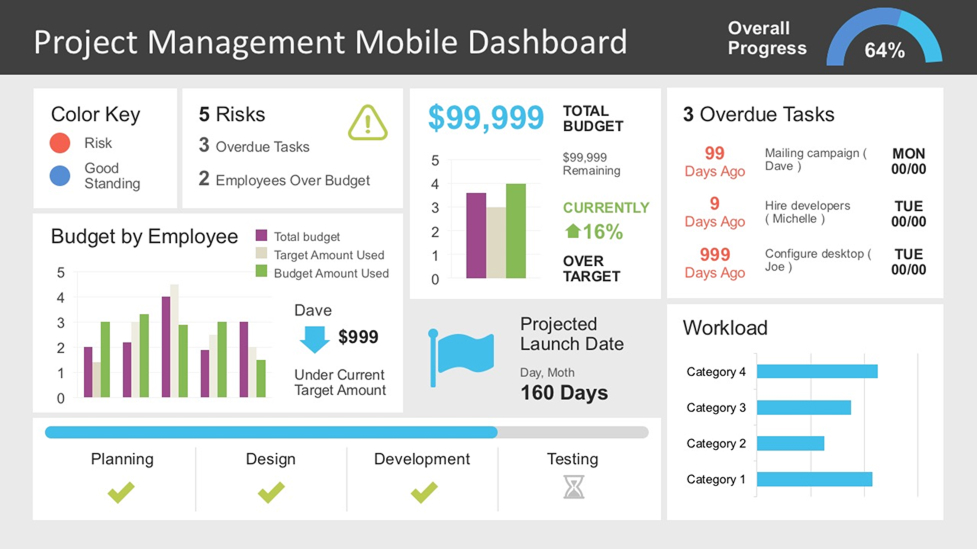
Using Balanced Scorecards, KSB Project Management Services creates a set of visual dashboards that provide comprehensive project progress insights, enabling executives to make informed decisions.
These dashboards include the following:
This information can be explored in detail, starting from the corporate level down to the most granular level of data